
 中文
中文
-
Shipping Containers
- Container Parts
- Roof Panel
- Side Panel
- Front End Panel
- Door Panel
- Front Corner Post
- Rear Corner Post (Outer/Inner)
- Cross Member
- Bottom Side Rail
- Top Side Rail
- Door Sill
- Front Bottom Rail
- Top End Rail
- Door Header Upper/Lower
- Door Rail
- Floor Spacer
- Angle
- Top/Bottom End Rail
- Door Edge Member
- Door Sealing
- Door Frame Profile
- Door Lining
- Door Hardwares
- Door Gasket
- Side Panel/Lining
- T-Floor
- Roof Panel/Lining
- Cross Member
- Bottom Side Rail
- Top Side Rail
- Ledge PVC
- Kazoo Drain
- Auto Drain
- Alu Tube
- Auto Drain Center Part
- PVC Drain Pipe
- PVC Plugs f. Drain with Ring and Steel Wire
- Door Screw
- Door Screw Nut
- Door Screw Rubber
- Tapping Screw
- Stainless Blind Rivet
- Lashing Ring
- CSC Plate
- Welding Wire
- Tapping Screw Bit
- Vehicle Parts
- Ship Supplies
- 00. Provisions
- 11. Welfare Items
- 15. Cloth & Linen Products
- 17. Tableware & Galley Utensils
- 19. Clothing
- 21. Rope & Hawsers
- 23. Rigging Equipment & General Deck Items
- 27. Painting Equipment
- 31. Safety Protective Gear
- 33. Safety Equipment
- 35. Hose & Couplings
- 37. Nautical Equipment
- 39. Medicine
- 45. Petroleum Products
- 47. Stationery
- 49. Hardware
- 51. Brushes & Mats
- 55. Cleaning Material & Chemicals
- 59. Pneumatic & Electrical Tools
- 61. Hand Tools
- 63. Cutting Tools
- 65. Measuring Tools
- 69. Screws & Nuts
- 75. Valves & Cocks
- 77. Bearings
- 79. Electrical Equipment
- 81. Packing & Jointing
- 85. Welding Equipment
- 87. Machinery Equipment
- Vehicles
- Lashing Tools
- Logistics Tools
Container PartsSafety Guard – Container Twist LockMay 22,2026Containers must be securely fastened to withstand strong winds, heavy waves and vessel movement at sea. Without reliable locking equipment, containers can shift, collapse or fall overboard, endangering the vessel, cargo and crew. The twist lock is the core component that keeps containers stable and safe during maritime transport.
Why Twist Locks Are Critical
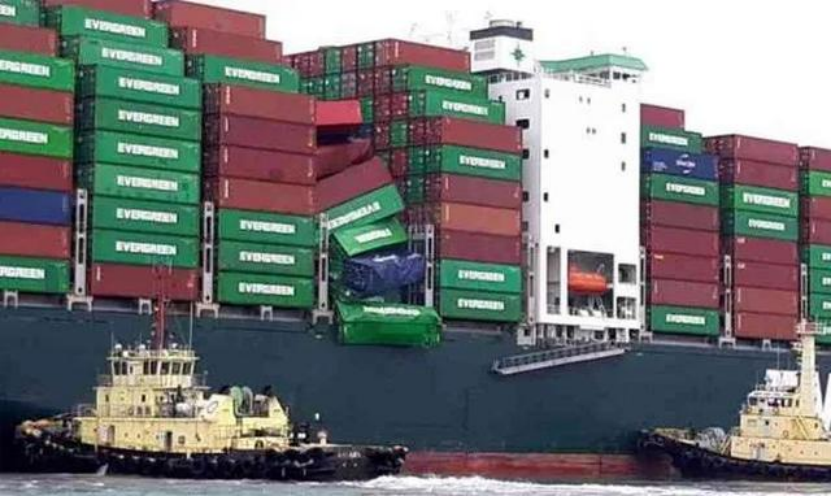
In December 2020, a large container vessel encountered severe weather near Kyushu, Japan. Improperly secured containers resulted in 36 units falling into the sea and 21 collapsing on deck. Such accidents prove that high‑quality fastening equipment is essential for safe shipping.
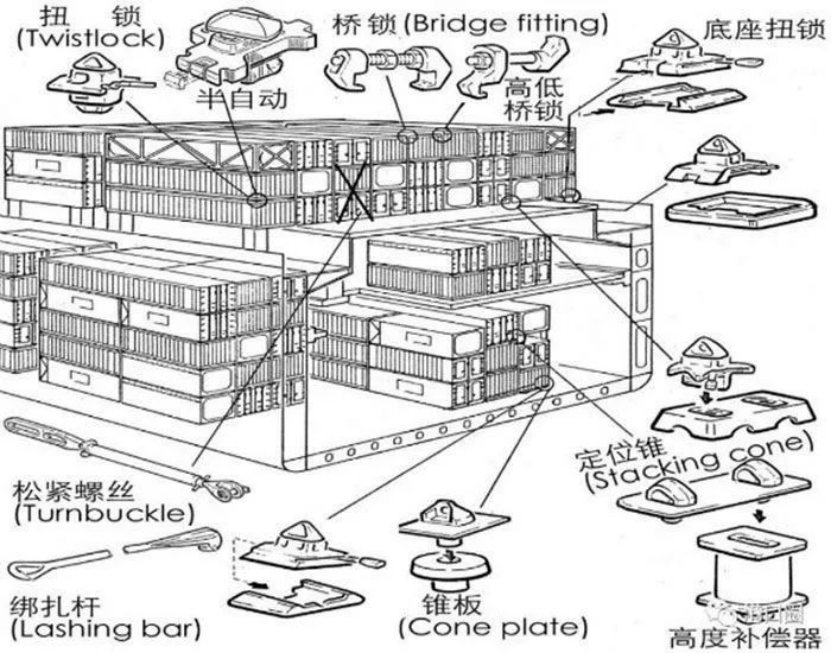
The main container securing tools include:
• Twist lock
• Bridge fitting
• Stack cone
• Base
• Cone plate
• Lashing bar
• Height compensator
Among these, the twist lock is the most widely used and critical safety component.
What Is a Twist Lock?
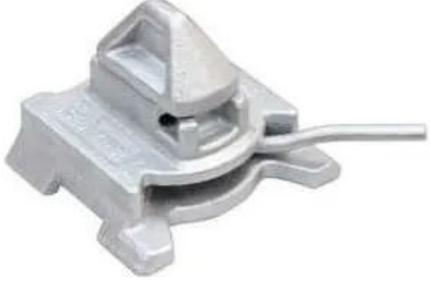
A twist lock (also called an angle locking device) is used to:
• Fix containers to the ship’s deck base
• Secure stacked containers together
• Prevent sliding, tilting and overturning under rough sea conditions
Basic Operation
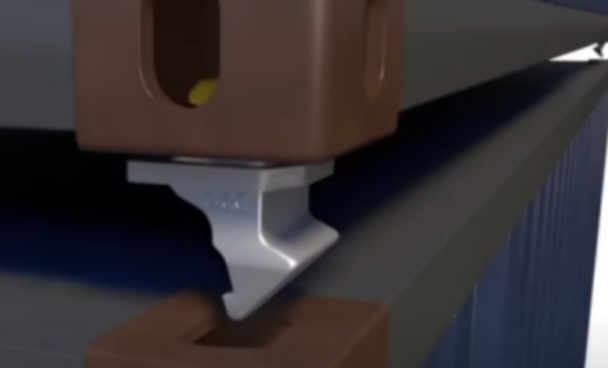
1. Place the twist lock into the corner casting of the lower container or deck base.
2. Lower the upper container into position.
3. Push the handle to lock the mechanism.
4. To unload: return the handle to unlock, then lift the upper container.
Types of Twist Locks
1. Manual Twist Lock
Commonly used to fix the first‑layer container to the deck base. Requires full manual operation.
2. Semi‑Automatic Twist Lock
The lock head automatically rotates and locks under the weight of the container.
Unlocking is done by pulling a release cable.
Widely used for medium‑to‑high stack layers.3. Full‑Automatic Twist Lock
Locks automatically when the container is placed, using gravity and special latch design.
No manual action needed during loading.Note: Under extreme conditions, full‑automatic twist locks may disengage. For maximum safety, they are often combined with manual or semi‑automatic types.
Safety Importance in High Stacks
On large container ships, stacks can reach 6 layers or higher. Each twist lock bears enormous weight. Strong waves or sharp turns can cause:
• Container collapse
• Cargo damage
• Structural damage to the vessel
• Loss of ship stability
• Vessel capsizing
Strict on‑site supervision is required during loading and unloading. Missing or incorrectly installed twist locks must be corrected immediately to ensure navigation safety.
CIMC Equilink – Full Range of Container Securing Parts
CIMC Equilink supplies high‑quality twist locks and complete container components trusted by global customers:
• Twist locks (manual, semi‑automatic, full‑automatic)
• Container corner casting
• Container floor
• Container locking device
• Lashing equipment
• Container corner post
• Container cross member
• Container gasket
• ISO tank parts
We provide reliable, durable and certified parts to support safe and efficient container operations worldwide.
Share:


Quick Quote
Contact UsHutai Road, No. 6415 Baoshan District, Shanghai China
Tel: +86 21 6686 7007
Fax: +86 21 6686 7007
Company Mobile: +86 17316368719
Email: info.equilink@cimc.com








 Copyright © 2019 CIMC Equilink
- Container Parts